
Briefs
Briefs
Mar 31
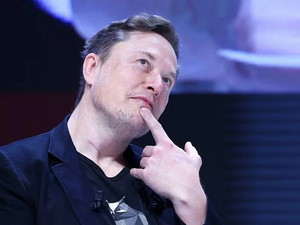
Elon Musk renewed the debate over AI autonomy by claiming Tesla's self-driving system could become more than ten times safer than human driving, even as questions remain about metrics, regulation, and real-world validation.
Elon Musk said on X that Tesla AI self-driving could become more than ten times safer than human driving, reigniting debate over how autonomous-safety claims should be measured.
The comment reflects Tesla's broader effort to move from driver-assistance software toward full self-driving through camera-based neural networks trained on large volumes of real-world driving data.
Tesla argues that AI systems can anticipate intent earlier than conventional safety interventions, including cases in which pedestrians may step into the road before a human driver reacts.
Skeptics note that a claim such as 10x safer needs a clear benchmark. Autonomous-driving safety is usually evaluated through crash rates, disengagement frequency, and miles traveled between incidents.
The market remains divided on technical approach. Tesla continues to back a vision-first stack, while competitors such as Waymo and Cruise rely more heavily on lidar and high-definition mapping to improve stability.
The episode captures both the promise and the unresolved issues around AI driving, including regulation, liability, and the burden of proving that large-scale deployment is truly safer than human control.